By Paul Bryant Birdwell - paul@roaringforkagency.com - 415 730 - 4854
A masterclass in modern sponsorship strategy — and what it means for brands everywhere.
If you follow the business of sport at all, you've likely seen the headlines: Mastercard is becoming the Official Naming Partner of the McLaren Formula 1 Team from 2026, in a deal reportedly worth around $100 million per season — the largest title sponsorship on the current F1 grid. But the dollar figure, while eye-catching, is only part of the story. What makes this partnership genuinely fascinating — and what sets it apart from nearly every other title sponsorship in the sport — is the why behind it, and the speed at which it came together. At Roaring Fork Agency (www.roaringforkagency.com), we spend our days in the weeds of sponsorship strategy, and this deal has a number of qualities that every brand and agency in the world should be paying close attention to.
From Principal Partner to Title Sponsor in Under a Year
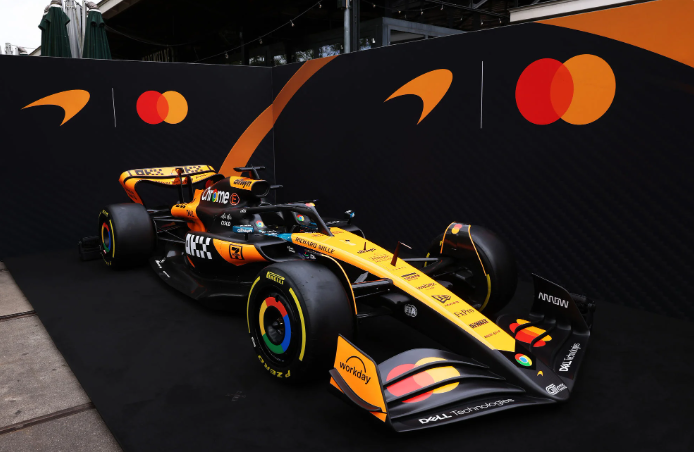
One of the most striking aspects of the Mastercard–McLaren deal is just how fast it escalated. Mastercard first came aboard as a principal partner, with the relationship launching publicly at the Las Vegas Grand Prix. By race 27 of the season — barely a calendar year later — the brand had seen enough in its internal metrics to justify a massive upgrade, jumping straight to naming partner status. That kind of acceleration is virtually unheard of in elite motorsport sponsorship, where deals of this magnitude typically take years of negotiation and careful brand alignment. The fact that Mastercard's data performed so strongly, so quickly, tells you something important: this wasn't a vanity play. It was a commercially driven decision, validated by real numbers, made faster than almost anyone in the paddock expected.
For sponsors evaluating the ROI of premium sport partnerships, that timeline is a powerful signal. It suggests that when the brand fit is genuinely right — and when the activation strategy is built around experience rather than passive logo placement — the returns can come faster than traditional sponsorship models would predict.
A Pivot Away from Advertising — and Toward Experience
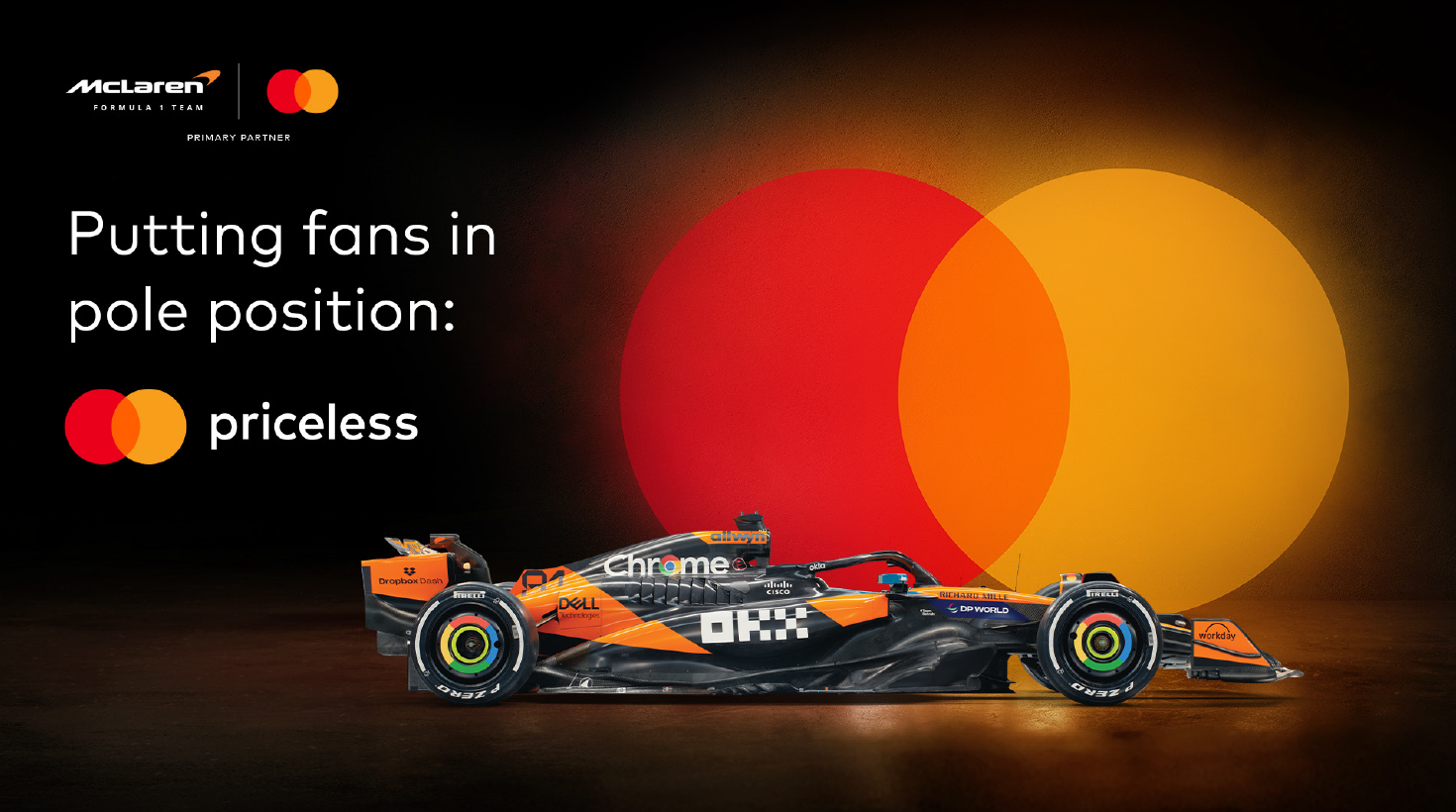
What really sets Mastercard apart in this conversation is something Raja Rajamannar, the company's Chief Marketing and Communications Officer, has spoken about openly: Mastercard's fundamental shift away from being an advertising-led organization. Back in 2013, the company made a strategic decision to pivot heavily toward experiential marketing, and by now, roughly 70 percent of their marketing budget has moved away from traditional advertising channels entirely.
The McLaren partnership is the clearest expression of that philosophy at scale. Through an initiative called "Team Priceless," Mastercard is promising fans experiences like behind-the-scenes track access, hot laps, and driver meet-and-greets — built around each Grand Prix's local culture. This isn't a brand slapping its logo on a car and calling it a day. It's a full ecosystem of fan-facing moments designed to make Mastercard feel like an indispensable part of the F1 experience, not just a name on a livery.
For anyone in the sponsorship world, this is the model worth studying. The most durable brand equity in sport isn't built through impressions — it's built through moments that fans actually remember and talk about.
The Demographics Tell the Real Story
Mastercard didn't stumble into F1 by accident. Rajamannar and his team ran a thorough analysis of their sponsorship portfolio and identified a gap that Formula 1 perfectly filled. The sport's audience is skewing younger — millennials and Gen Z fans are driving unprecedented growth — and its geographic reach is nearly unmatched, spanning Europe, Asia, the Americas, and the Middle East. For a global financial services brand, that kind of footprint is enormously valuable.
But perhaps the most interesting data point is this: approximately 40 to 42 percent of McLaren's fanbase identifies as women. For Mastercard, that demographic alignment was a deciding factor. Women represent a critical and often underserved audience in financial services marketing, and McLaren's unusually high female fan engagement gave Mastercard a direct line to a demographic it was already prioritizing internally. This is sponsorship strategy at its sharpest — not chasing the biggest audience, but finding the right audience within the biggest stage.
McLaren's Patience Paid Off — Big Time
There's an equally compelling story on McLaren's side of this deal. Until this partnership, McLaren was the only team on the F1 grid without a title sponsor in place. While every other constructor had already locked in a naming partner — Ferrari with HP, Red Bull with Oracle, Mercedes with Petronas — McLaren held out. Under the leadership of CEO Zak Brown, the team made a deliberate strategic choice: protect the integrity of the McLaren brand first, and wait for a partner that truly earned a place in the team name.
That patience has now paid off in a significant way. The resulting deal is not only the largest title sponsorship currently active in F1, but it arrived at a moment when McLaren is one of the sport's dominant competitive forces — which means the brand's commercial leverage was at an all-time high. Timing, in sponsorship, is everything. McLaren understood that, and executed on it flawlessly.
What This Means for the Wider Sponsorship Landscape
The Mastercard–McLaren deal is more than a single headline. It's a case study in how the economics and strategy of elite sport sponsorship are evolving. The old model — sign a logo, run some ads, measure reach — is giving way to something far more sophisticated. Brands that want to compete at the highest level are now expected to bring experiential creativity, data-driven audience targeting, and a long-term vision for how the partnership creates real business value.
Mastercard's approach checks every one of those boxes. They identified a gap in their portfolio, found the right sport, chose the right team — not necessarily the biggest name, but the one with the strongest marketing instincts and the best brand fit — and moved faster than anyone expected once the numbers proved the concept.
At Roaring Fork Agency, this is exactly the kind of thinking we help our clients develop. Whether you're a brand looking to enter sport sponsorship for the first time or an organization trying to maximize the value of an existing partnership, the Mastercard–McLaren deal offers a masterclass in doing it right. The future of sponsorship isn't about buying visibility. It's about building experiences, earning loyalty, and making your brand feel like it belongs — not just on the car, but in the hearts of the fans watching it race.
Roaring Fork Agency specializes in sponsorship strategy, brand activation, and commercial partnership development. If you're ready to think differently about how your brand shows up in sport and entertainment, we'd love to talk.
If you have any questions about event sponsorship or venue naming rights contact Paul Birdwell at the Roaring Fork Agency:
paul@roaringforkagency.com
415 730 - 4854
Aspen, Colorado
Tiburon, California
Incline Village, Nevada
Santa Monica, California
Newport Beach, California
Twitter - @RoaringForkAgcy
"Action may not bring happiness but there is no happiness without action." William James